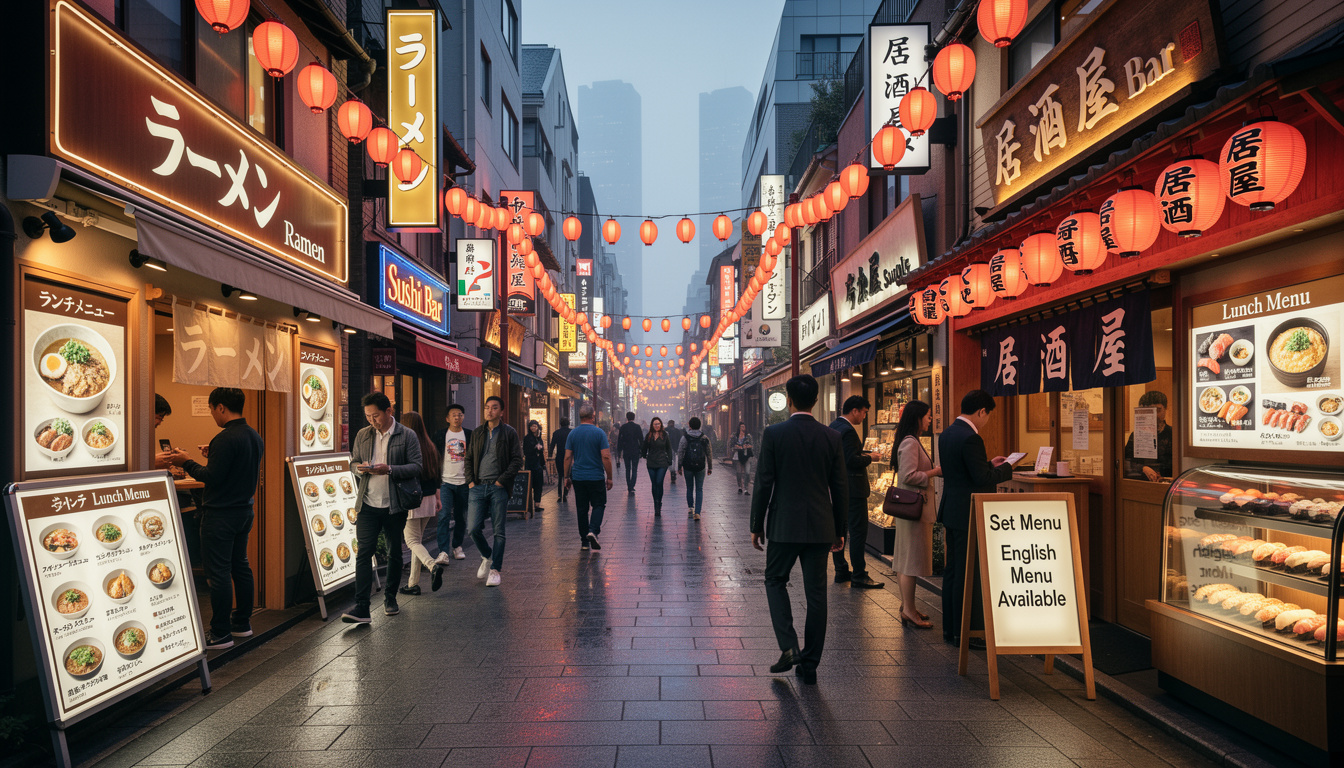
En bref — Quick takeaways
- 🔎 Find English menu restaurants in central hubs: Ginza, Shibuya, Asakusa, Roppongi and Ikebukuro.
- 🚉 Look for spots with easy access (near major stations) for smoother arrivals and shorter walks.
- 💬 Prioritize venues with visible language support or reservation pages in English to save time and stress.
- 📲 Use reservation platforms and guides to book in advance — try services like Book Japan restaurants or TableCheck Japan reservations.
- 🍣 Mix experiences: from casual ramen to Michelin kaiseki — tourist friendly options exist at every budget.
Tokyo is a city where culinary emotions run high and choices explode at every corner. For foreigners seeking restaurants with an English menu, the good news is that the capital has become distinctly more welcoming: clear signage, digital menus, and multilingual staff are now common in neighborhoods frequented by visitors. Practical travelers and food-lovers will appreciate that many top spots combine easy access by train with strong language support, turning potential confusion into a relaxed, memorable meal. This guide distills actionable routes to the best English-friendly dining in Tokyo — where to find them, how to reserve without friction, and what types of dining experiences to expect. The focus ranges from lively izakayas and okonomiyaki counters in Asakusa to rooftop tempura counters with panoramic views, and Michelin-caliber kaiseki in Ginza — all chosen to help foreigners connect with Japanese food culture smoothly. Expect concrete examples, booking tools, neighborhood tips, and etiquette notes that transform a simple search for an “English menu” into a curated culinary plan ready to be explored. This approach ensures every meal becomes a story rather than a logistical hurdle.
English menu restaurants Tokyo: where to find them easily in key neighborhoods
Finding an English menu restaurant in Tokyo is often a matter of location. Central hubs like Ginza, Shibuya, and Roppongi concentrate tourist friendly dining, while Asakusa and Ikebukuro offer authentic flavors with approachable menus. Look for places close to major station exits — the shorter the walk, the fewer surprises on arrival.
Examples bring the idea to life: Asakusa hosts okonomiyaki and monjayaki spots that display English signs and cooking videos; Roppongi hides refined counters with bilingual staff; Ginza features kaiseki and tempura houses that accept English reservations. These patterns make it straightforward to plan routes that combine sightseeing and mealtime without stress.
Neighborhood selection directly influences accessibility and the level of language support — a crucial insight for planning efficient dining in Tokyo.
Top places (short list) where English menus are common
- 🍜 Asakusa — traditional okonomiyaki and monjayaki with English instructions at counters like Okonomiyaki Monjayaki Asakusa Tsurujiro.
- 🍶 Roppongi — higher-end izakaya and sake-focused venues such as Nurukan Sato, with staff used to hosting foreigners.
- 🍣 Ginza — Michelin-level sushi and kaiseki (book ahead); many accept English bookings and menus.
- 🥩 Kagurazaka & Shinjuku — shabu-shabu and yakiniku restaurants with English menus and private rooms for groups.
- 🏙 Ikebukuro — themed sports-izakaya like Zanshin offering an engaging atmosphere and English-friendly service.
Choosing neighborhoods first streamlines the search for English-accessible dining and reduces time spent hunting for suitable restaurants.
Quick comparison table: sample English-menu restaurants with easy access and language support
| Restaurant 🍽️ | Neighborhood 🚉 | Easy access ⛩️ | Language support 💬 | Avg. price (dinner) 💴 |
|---|---|---|---|---|
| Asakusa Tsurujiro 🍳 | Asakusa | 3-min walk from Asakusa Station 🚶♂️ | English menus + cooking videos 📺 | ~2,000 JPY |
| Nurukan Sato 🍶 | Roppongi | 2-min walk from Roppongi Station 🚶♀️ | Staff familiar with foreigners; sake recommendations 🍶 | ~8,000 JPY |
| Tempura & Sushi An (XEX) 🍤 | Atago / Toranomon | 5-min from Kamiyacho Station 🚕 | English reservation pages; counters with English explanations 📝 | ~15,000 JPY |
| ShabuZen Kagurazaka 🥘 | Kagurazaka | 1-min walk from Iidabashi Station 🚉 | English-friendly staff; all-you-can-eat options 🍲 | ~8,000 JPY |
| Zanshin 🥩 | Ikebukuro | 3-min walk from Ikebukuro Station 🚶 | Themed menu with English keywords; visual dishes 📺 | ~4,000 JPY |
A clear table helps match expectations — distance, language support, and price are the three pillars of a relaxed dining choice in Tokyo.
Before booking, watch concise orientation videos showing how English menus are presented and how to interact with staff. These clips accelerate on-the-ground confidence for visitors who want a smooth dining experience.
Reservation tools and practical tips to book English-friendly restaurants
Reservations eliminate uncertainty. Use platforms that cater to foreigners and list language support — options like Book Japan restaurants simplify the process for non-Japanese speakers. Many upscale venues or popular ramen shops also list reservation details on English-friendly portals.
For last-minute bookings or confirmation of language options, TableCheck Japan reservations is widely used by restaurants that welcome international guests. Combining advance booking with a short confirmation message (in simple English) to the restaurant reduces the risk of misunderstandings.
Proactive reservations and confirmation messages are the most effective way to secure a spot and verify language support, especially during weekends and special events.
Videos about booking platforms and how to navigate English pages are useful companions to written guides, especially for travelers who prefer visual walkthroughs before committing.
Handy pre-visit checklist
- 📸 Save a screenshot of the menu — shows dishes and prices.
- 🕰 Reserve at least 2–3 days ahead for popular spots; week+ for Michelin or kaiseki.
- 🗣 If allergies or halal needs exist, use clear English and link to help pages like Halal food Tokyo.
- 💳 Check payment methods — many small places are cash-preferred.
- 🔁 Note station exits — the nearest exit number often saves 10–15 minutes.
Working through a short checklist transforms dining from guesswork into a relaxed, enjoyable process for every traveler.
Types of English menu restaurants in Tokyo and what to expect
Tokyo’s options range from budget to splurge. The core categories foreign visitors seek include casual ramen shops, izakaya, kaiseki, sushi counters, yakiniku, and hotpot (shabu-shabu / sukiyaki). Each type requires a slightly different booking and etiquette approach, but English menus and visual ordering aids are increasingly common across all categories.
- 🍜 Ramen — look for English menus or visual ticket machines; check curated lists like Best ramen Tokyo 2026 for up-to-date recommendations.
- 🍣 Sushi — counters may require reservations; many high-end spots offer English tasting menus.
- 🥢 Kaiseki — multi-course, seasonal; ask about kaiseki dinner price ranges before booking.
- 🔥 Yakiniku & Shabu-shabu — casual to premium, often excellent for groups and easy to navigate with English menus.
- 🛎 Themed izakaya or specialty bars — fun, photo-rich, and usually tourist friendly with English menus or picture-based ordering.
Knowing the category helps set expectations around formality, price, and whether advance booking or special preparations are needed.
Practical dining etiquette and cultural tips for foreigners
Tokyo dining etiquette is part of the experience: no tipping, quiet phone use, and polite queuing. For shared plates in izakaya or hotpot, use communal utensils where provided and avoid double-dipping. When given chopsticks rests or masu cups, accept with gratitude — small gestures matter.
Photographing dishes is common, but be mindful of other guests and avoid flash in intimate counters. Communicating dietary preferences in clear, simple English or using translated allergy cards reduces risk and keeps the mood positive.
Politeness and patience open doors — hosts often go the extra mile when guests show effort and respect.
Useful apps, sites and further food guides for English-friendly Tokyo dining
- 📱 Japan Trip Calculator — practical itineraries and restaurant indexes for English-speaking travelers.
- 🍣 Guides to sushi and markets — check curated pieces like Best Tsukiji sushi for market-area options.
- 📚 Local food guides and reservation platforms that support English make planning faster and more reliable.
Use a combination of guide articles, booking platforms, and saved screenshots to ensure the dining plan stays on track during a busy Tokyo day.
How to identify restaurants with English menus before arriving?
Search neighborhood guides and reservation platforms that display language options, look for signs like ‘English menu’ on websites, and use apps that filter by multilingual support. When in doubt, check proximity to major stations for higher likelihood of English support.
Are reservations necessary for English-friendly restaurants in Tokyo?
For popular sushi, kaiseki, and rooftop tempura counters, reservations are strongly recommended — often days to weeks ahead. Casual ramen and izakaya can sometimes be walk-in, but evenings and weekends fill fast.
What payment methods are accepted at English-menu restaurants?
Larger and tourist friendly restaurants accept credit cards and digital payments; many smaller venues still prefer cash. Always check the restaurant’s payment info on reservation pages or call to confirm.
Can dietary restrictions be handled at Tokyo restaurants?
Yes, many places will accommodate allergies or halal requests if informed in advance. Use clear English, send a reservation note, or consult guides like specialized halal listings to find suitable options.