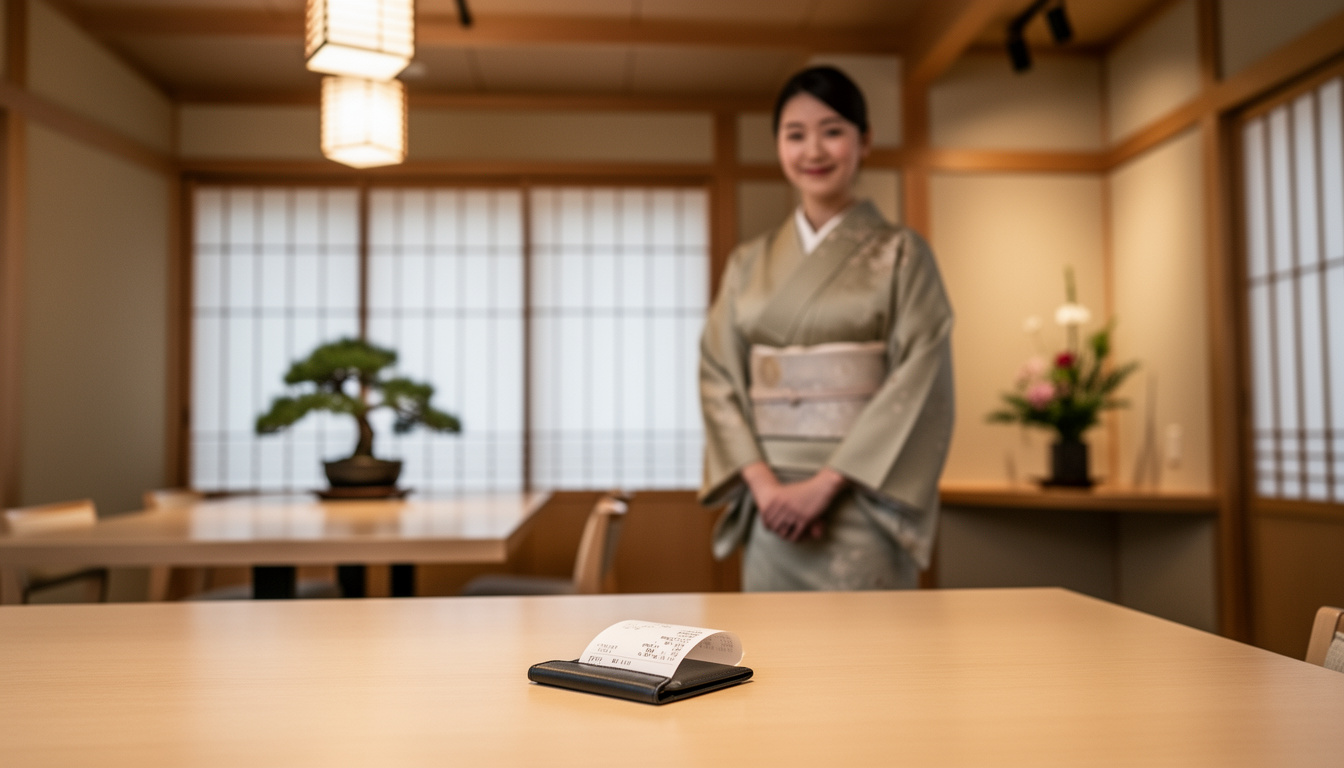
En bref — Key takeaways
- ✅ No tipping in most Japanese restaurants — excellent service is already included.
- ❌ Leaving money can be seen as rude or insulting to local hospitality.
- 🎁 Exceptions: certain ryokans, private guides, or bespoke experiences where a small gift or special gesture is appropriate.
- 🧭 Practical alternatives: polite thanks, careful handling of bills, and small souvenirs for staff when needed.
Tipping in Japan restaurants: is it expected or rude? For many travelers this question triggers anxiety: the instinct to reward great service collides with a culture where service is an expression of hospitality, not a transaction. In Japan, the centuries-old philosophy of omotenashi—anticipatory, wholehearted care—means staff take pride in flawless service as a matter of professional honor; offering cash can unintentionally imply the worker needs supplemental pay or that the employer fails to treat staff fairly. Seasoned travelers and digital nomads who return repeatedly learn to translate gratitude into culturally appropriate actions: careful manners, verbal appreciation, small gifts at traditional inns, or simply tipping via the venue’s established channels when a service charge is explicitly added to the bill. This guide blends practical rules, real scenarios, and a short case study of a wandering traveler to help decode tipping customs in Japan so that respect replaces uncertainty on every meal, ride, or stay.
Tipping in Japan restaurants: why tipping is usually considered rude
In Japanese social norms, exemplary service is expected as the default display of professional pride. Leaving extra money on a table can be misread as an insult or create awkwardness, because it suggests the staff are underpaid or that the guest is patronizing them.
For travelers who value genuine local interactions, understanding that tipping can be perceived as rude helps avoid cultural faux pas and preserves the dignity of hospitality staff. Insight: consider that gratitude in Japan is often non-monetary—attention to manners and prompt polite thanks speak louder than cash.
Historical and cultural context that explains the etiquette
Japan’s service culture grew from traditions where craftsmanship and courtesy were social obligations rather than billable extras. The term omotenashi captures a mindset where the guest’s comfort is anticipated without expectation of reward.
Modern tourism and international influences have introduced ambiguity, but the social instinct to refuse a tip persists; staff may chase guests to return money left behind. Insight: treating the listed price as final shows cultural sensitivity and respect.
When tipping can be acceptable or expected — rare exceptions
While the rule is 0% in most restaurants, a few situations call for nuance. High-end establishments sometimes include a service charge on the bill; in those cases, no further cash is needed unless explicitly directed.
Traditional inns (ryokans), private tour guides offering personalized multi-day service, or cultural specialists (e.g., private tea ceremony hosts) may accept or even expect a small token, though it’s often presented as a wrapped gift rather than loose change. Insight: when unsure, ask politely or follow the venue’s stated policy.
- 🎎 Ryokans: small wrapped gift or souvenir is appropriate in some cases.
- 🧑🏫 Private guides: modest additional payment may be accepted if previously agreed.
- 🍽 Upscale restaurants: check the bill for a service charge first.
- Taxis: rounding up is common but not expected; never insist after refusal.
Practical rule-of-thumb list for travelers
Follow these simple steps to avoid awkward moments: check bills for service charges; avoid leaving cash on tables; never force a tip if refused; use official channels (credit card or venue-managed gratuity) when available.
Case study: Maya, a solo digital nomad, once left a bill on a sushi counter and was pursued by staff to return it—she now uses verbal thanks and precise eye contact to show appreciation. Insight: small behavioral adjustments prevent miscommunication.
Practical alternatives to tipping — how to show appreciation
In place of cash, consider verbal gratitude, a respectful bow, or a handwritten note in simple English/Japanese. Buying a small local souvenir for the ryokan staff or leaving a positive review for a guide are highly appreciated and culturally appropriate gestures.
Restaurant patrons can compliment the chef, recommend the place to friends, or return as repeat customers — all powerful expressions of respect that align with Japanese hospitality. Insight: appreciation that reinforces reputation matters more than money.
| Service Type | Typical Action | Emoji Guide |
|---|---|---|
| Casual restaurants | No tip — pay exact bill; say arigatou | 🍣 ✅ |
| Upscale restaurants | Check for service charge on bill; no extra cash | 🍱 💳 |
| Taxi | Round up if desired; do not force | 🚕 ↗️ |
| Ryokan/private guide | Small gift or pre-arranged extra payment; present discreetly | 🎁 🙇 |
Real examples: how to handle the bill in restaurants and hotels
At a ramen shop or family-run izakaya, place payment on the counter or hand cash to staff directly; avoid leaving money on the table. When a service charge appears at a high-end kaiseki meal, treat it as the full gratuity and don’t offer more.
Hotels may include a cleaning fee or service charge; tipping housekeepers is not expected. If a concierge goes above and beyond, a sincere letter or booking future stays through them yields more positive outcomes than handing cash. Insight: follow posted policies and emulate local cues.
Where to read more and plan respectfully
For deeper practical tips on eating habits, budgets, and dining culture, consult resources that explain local dining manners and costs. A useful read on table manners is available at Japan eating etiquette, and travelers planning unique culinary nights might explore curated lists like Japanese whisky bars for respectful bar behavior.
For budgeting and understanding visit costs in Japan, see practical breakdowns of daily food expenses and premium experiences to help plan whether a service charge may appear. Insight: informed travelers relax more and enjoy more authentic interactions.
- 🔍 Check the bill for service charge before deciding to offer anything extra.
- 🙏 Use simple Japanese phrases: arigatou (thank you) and a slight bow to express gratitude.
- 🎁 Reserve gifts for ryokan staff rather than handing cash; wrap items respectfully.
- 💬 When unsure, ask the front desk or host in polite terms — it’s better than guessing.
Is tipping ever expected at restaurants in Japan?
No, tipping is generally not expected at restaurants. If a service charge is added to the bill in upscale places, that replaces tipping. Leaving extra cash can be misunderstood and sometimes returned by staff.
What should travelers do instead of tipping to show appreciation?
Simple acts work best: say thank you, bow, leave a positive review, recommend the place to others, or bring a small wrapped gift in cases like a ryokan. These reflect cultural values more than cash.
Are there any exceptions where extra payment is acceptable?
Yes — private guides, bespoke cultural experiences, and some ryokans may accept modest compensation or a gift. When in doubt, ask discreetly or follow the venue’s stated policy.
What happens if money is left accidentally?
Staff often will return money left as a tip, sometimes by running after guests. That reaction underscores the cultural preference against gratuities rather than rudeness.