 EN
EN


En bref — Quick brief
- 🌸 Learn how to use chopsticks with confidence and grace.
- 🧭 Key table manners and dining etiquette every traveler to Japan and other parts of Asian culture should know.
- 🔧 Clear, step-by-step proper technique to hold and control chopsticks.
- ⚠️ Avoid the top taboos rooted in history and ritual to show respect.
- 🍜 Practical tips for rice, noodles and communal dishes that make eating smoother and more enjoyable.
How the smallest gestures shape a traveler’s welcome: In Japan mealtimes are rituals that turn simple bowls into stages for respect and mindfulness. Observing chopstick etiquette is not only about mechanics but about reading social signals—knowing when to rest, when to share, and how to move with care. For a frequent visitor who knows the back alleys of Kyoto and the late-night ramen stalls of Tokyo, mastering chopsticks is part of being seen as someone who values local customs. This piece blends practical proper technique with cultural background and on-the-ground anecdotes from diners and artisans. Expect concrete drills to pick up rice or slippery tofu, a compact list of behaviors to avoid that trace back to Shinto and Buddhist rituals, and tips for communal dining that prevent awkward faux pas. The aim is simple: help readers use chopsticks correctly, while deepening appreciation for the subtle language of the table. Read on to transform tentative pinches into calm, respectful motions that elevate every bite.
How to hold chopsticks correctly: practical steps for proper technique
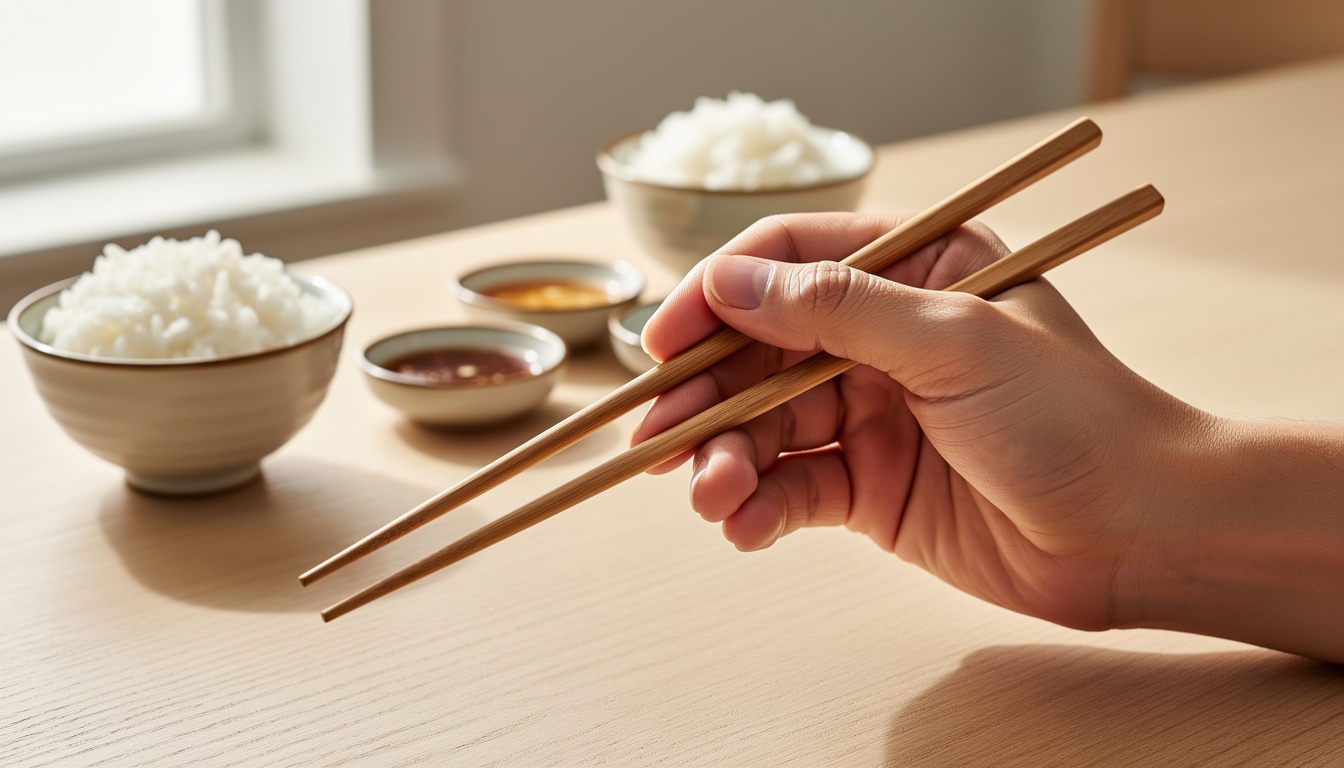
The foundation of confident chopstick use is a reliable grip and gentle control. Start by placing one chopstick as an anchor against the base of the thumb and the side of the ring finger; this stick should remain mostly still. The top chopstick is held like a pencil, using the thumb, index and middle fingers to steer each movement.
Practice slow opening and closing motions until the tips meet cleanly. Small exercises—picking up grapes, peanuts, or a single grain of sticky rice—build precision. These drills train fine control and help internalize the proper technique that makes eating feel natural rather than forced.
Step-by-step grip and exercises to master control
Position the lower stick firmly as a base and keep it steady. Use the upper stick to pinch and lift; aim for smooth, decisive motions rather than tight gripping. Gradually increase difficulty from larger pieces to tiny or slippery items.
- 🥢 Anchor the lower chopstick between thumb base and ring finger.
- ✍️ Grip the top chopstick like a pencil with thumb, index and middle fingers.
- 🎯 Practice by picking up small items: peas, diced vegetables, peanuts.
- 🏆 Advance to rice clumps or noodles—lift the bowl slightly when necessary.
Key insight: steady pressure and relaxed fingers beat brute force; finesse is the heart of chopsticks etiquette.
Table of common do’s and don’ts: simple rules for respectful food handling
Knowing a handful of clear rules prevents most embarrassing moments. Below is a compact reference comparing polite actions with the gestures to avoid.
| Action ✅ | Avoid ❌ | Why it matters ℹ️ |
|---|---|---|
| Place chopsticks on a hashi-oki when pausing 🍵 | Stick chopsticks upright in rice (Tate-bashi) 🪦 | Upright sticks recall funeral rites; seen as very disrespectful 😶 |
| Use serving chopsticks or the blunt end for shared plates 🍽️ | Pass food from chopstick to chopstick (Hashi-watashi) 🔁 | Resembles cremation transfer rituals and is unhygienic 🧼 |
| Rest sticks horizontally with tips left 👈 | Rub disposable chopsticks together loudly ✋ | Implies cheap utensils and disrespects the host or chef 🙅 |
| Lift bowls gently when eating sticky rice 🍚 | Wave or point with chopsticks at people 👉 | Pointing is aggressive; keep gestures calm and neutral 🙇 |
Key insight: small, visible choices—where sticks rest, how shared food is handled—communicate respect and cultural literacy.
Common taboos to avoid in Japanese and broader Asian culture dining etiquette
Many taboos originate in religious and historical rituals—understanding the story behind them makes compliance easier and more meaningful. Practices related to funerary rites, community hygiene, and social harmony are at the root of several prohibitions.
- 🪦 Tate-bashi — Never stick chopsticks vertically into rice; it mirrors offerings for the dead.
- 🔁 Avoid passing food directly between chopsticks; use a serving utensil or place food on the guest’s plate.
- ✋ Don’t point, tap, or drum with chopsticks—these acts can seem aggressive or impatient.
- 🧻 Refrain from dramatically rubbing disposable sticks together; ask for another pair if splinters appear.
- 🍽️ Don’t hold a bowl while stabbing or tearing food; use fingers and coordinated movements.
These rules are not arbitrary—they preserve decorum and echo centuries of ritual. Travellers who internalize them show thoughtful engagement with local customs. For a broader primer on eating manners in Japan, consult this Japanese eating etiquette guide.
Key insight: taboos are cultural signals; avoiding them opens doors and invitations rather than closing them.
Shared dining: how to handle communal plates with respect
Shared dishes are the heart of many Asian meals. The polite flow requires conscious gestures: turn chopsticks around, use serving tongs, or take food to your plate before eating. Direct transfers and digging for favorites upset the social balance.
A helpful travel anecdote: a solo traveller named Sora once watched a busy family-style counter in Osaka where servers smiled longer at diners who moved with composure. Sora’s calm use of serving etiquette earned friendly nods and an extra side of pickles—proof that dining etiquette yields social currency.
Key insight: sharing well is a visible act of respect that strengthens communal bonds at the table.
Practical tips for rice, noodles and slippery foods — be brave with bowls
Rice: in many Japanese and Chinese contexts, lifting the rice bowl closer to the mouth is acceptable and often recommended to scoop sticky rice easily. Bring the bowl nearer and use controlled pinches to gather small clumps.
Noodles and soups: combine chopsticks with a spoon when broth is involved; use chopsticks to lift a manageable portion and the spoon to support it. This dual technique is common and efficient.
- 🍚 Rice — lift the bowl slightly and scoop; sticky rice is your ally.
- 🍜 Noodles — grab a bundle, lift, and slurp politely when appropriate (slurping is often acceptable in Japan and signals enjoyment).
- 🍢 Slippery items — approach from above and apply even pressure; think of chopsticks as refined fingers.
For more context about eating styles across Japan’s dishes, readers may enjoy a comparative piece on ramen styles and table habits like tsukemen vs ramen, which shows how technique adapts to food types.
Key insight: adapting technique to the dish—rice, noodles, or soup—keeps meals fluid and respectful.
Tools, length and small rituals that matter
Chopstick length affects comfort; a good rule of thumb is roughly 1.5 times the width of the hand from thumb to index finger. In Japan, different sizes exist for men, women and children to match ergonomics. Picking the right length makes delicate tasks easier and reduces fatigue.
When a chopstick rest isn’t available, folding the chopstick wrapper into a triangle provides a tidy, respectful improvised stand. This small ritual signals attention to detail and care for food handling.
Key insight: thoughtful tools and tiny rituals communicate refinement and an eagerness to honour local practices.
What is the single worst chopstick mistake in Japan?
Sticking chopsticks vertically into a bowl of rice (Tate-bashi) is the most serious faux pas because it evokes funeral rituals; avoid it at all costs.
Can beginners use training chopsticks?
Yes. Training sticks or a simple rubber-band hack can help learn the motion. Transition to regular chopsticks once comfortable to fully embrace the proper technique.
How should shared dishes be served in a polite way?
Use serving utensils or the blunt end of your chopsticks to move food to someone’s plate rather than transferring between chopsticks; this respects hygiene and avoids ritual associations.
Is it rude to lift a bowl when eating rice?
Not in many Asian contexts—lifting a bowl to the mouth is often practical and acceptable, especially for sticky rice. Do so gently and with composure.