 EN
EN


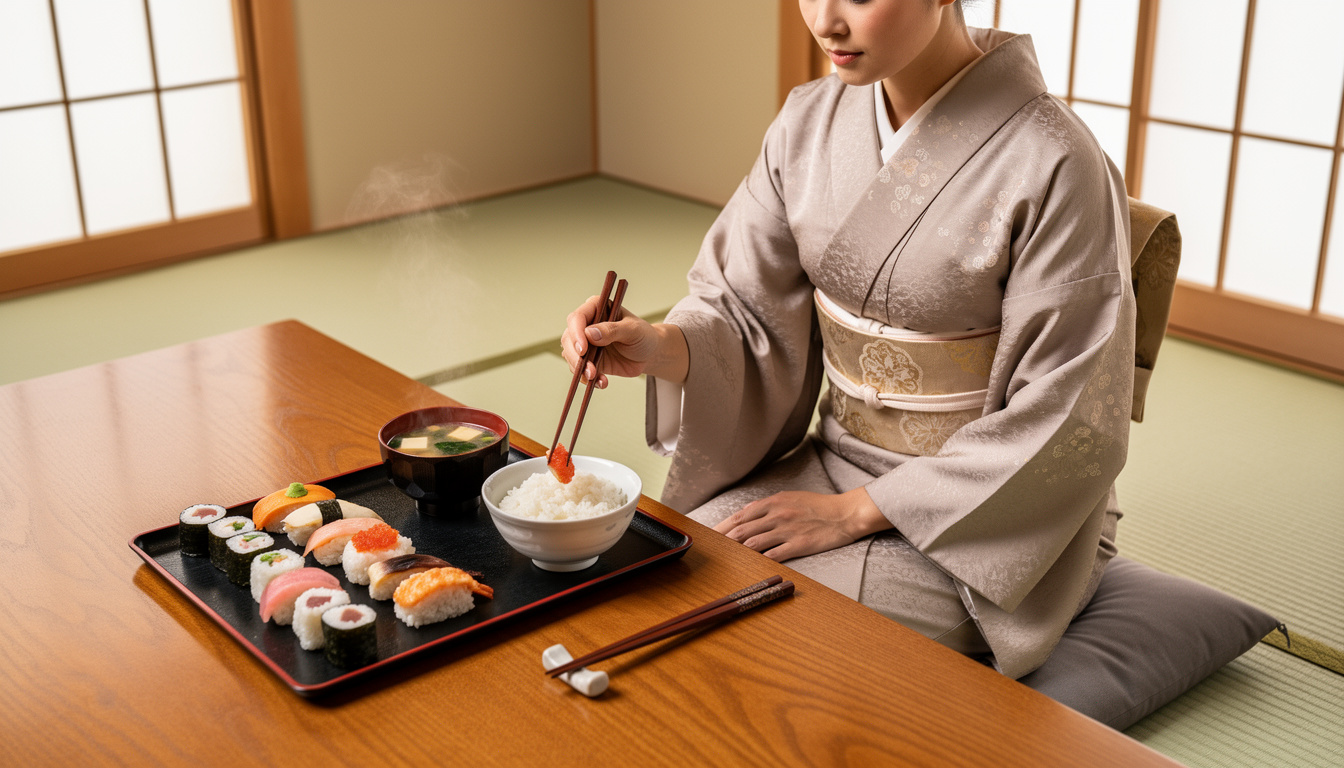
En bref — Quick brief
- 🍣 Learn core Japanese dining etiquette: itadakimasu before meals and gochisō-sama deshita after. ✅
- 🥢 Master chopstick use and avoid taboo actions like passing food with chopsticks. ❌
- 🥢 Respect food sharing customs: use the clean end for communal plates and a small plate for sauces. 🍶
- 🍜 Embrace soup drinking rules and feel free to slurp noodles; it signals enjoyment. 😋
- 🙇♂️ Observe bowing at meals and polite pouring rituals — this equals respectful eating. 🤝
Eating etiquette Japan: what should you know before dining? The first meal in Japan often feels like a test of social radar: the lacquer bowls gleam, steam rises from miso, and an invisible script guides every motion. Nervousness and excitement mix when a visitor wonders whether to bow, slurp, or pick up the soy sauce. Understanding table manners Japan turns that tension into delight — food becomes a conversation, not a minefield. The ritual phrases are compact cultural keys: the pre-meal “いただきます” carries humility toward the cook and the season, while “ごちそうさまでした” closes the circle with gratitude. Beyond words, the rhythm of pouring drinks, the correct chopstick use, and the communal handling of dishes reveal Japan’s emphasis on harmony and respect. This guide maps the essential gestures, explains why seemingly small acts (like not tipping) matter in local contexts, and gives practical scripts for everything from conveyor-belt sushi to formal kaiseki. Expect clear examples, a relatable dinner scene, and exercises to transform anxiety into confident, respectful dining — the kind that opens smiles and deeper cultural exchange.
Essential Japanese dining etiquette every traveler should know
Japanese meals are governed by unspoken rules that value cleanliness, harmony, and modesty. Begin and end with the phrases that frame the meal: say いただきます (itadakimasu) before eating and ごちそうさまでした (gochisō-sama deshita) after — these express gratitude to the cook and to nature.
Polite behavior includes small rituals: avoid pouring your own drink in group settings, never stick chopsticks upright into rice, and remember that no tipping Japan is a real cultural norm — excellent service is included. These gestures show respectful eating and smooth social interactions. Insight: simple words and small motions speak louder than elaborate apologies.
Master chopstick use and food sharing customs
Chopsticks are everyday tools and cultural symbols. Correct chopstick use avoids several common faux-pas: never stab food, never pass food directly from chopsticks to chopsticks, and always rest them on a 箸置き (hashioki) when not in use.
When sharing plates, use the opposite end of the chopsticks (or serving utensils) to transfer food to your own dish. This small adaptation honors communal hygiene and the spirit of sharing. Insight: handling shared dishes correctly transforms a meal into a cooperative act of respect.
Chopstick actions: acceptable vs offensive
| Action | Acceptable? | Why it matters |
|---|---|---|
| Resting on a hashioki 🍵 | ✅ | Keeps table clean and shows manners. |
| Stabbing food 🍖 | ❌ | Looks rude and resembles improper dining habits. |
| Passing food from chopstick to chopstick 🍱 | ❌ | Resembles funeral rituals — avoid it. |
| Using the opposite end for shared dishes 🍽️ | ✅ | Shows hygiene and respect during food sharing customs. |
For hands-on practice, try sharing a platter at an izakaya and consciously use the clean ends or serving spoons; the host will notice the courtesy. Insight: the smallest chopstick habit signals cultural sensitivity.
Sushi etiquette and restaurant behavior Japan
Sushi dining brings its own set of cues. At a sushi counter, let the chef guide portions, eat pieces in one bite when possible, and use soy sauce sparingly — dip the fish, not the rice. These details reflect sushi etiquette rooted in respect for ingredients and craft.
In many Japanese restaurants, payment systems differ: some use ticket machines, some seat guests at counters, and most expect tidy behavior and gratitude. For reservations and tips on finding the right spot, use a reliable booking tool to secure seats at popular places — for instance, consider planning ahead with services that help book Japan restaurants. Insight: knowing the rhythm of a sushi bar creates ease and deeper appreciation.
Conveyor-belt sushi: casual rules and fast etiquette
Conveyor-belt (kaiten) sushi is relaxed but still guided by etiquette: take plates carefully, avoid touching other plates, and move quickly when an item is meant for someone else. Use the designated stack to count plates for payment and be mindful that some premium nigiri are intended to be eaten immediately.
To explore popular conveyor-belt spots and practical tips for Tokyo, consult a focused guide about conveyor-belt sushi in Tokyo. Insight: casual settings still reward considerate behavior.
Phrases, bowing at meals, and polite table expressions
Words and bows shape the dining rhythm. Start with いただきます, close with ごちそうさまでした, and use polite forms like ありがとうございます for thanks. The physical bow before and after a meal — even a slight nod — complements these phrases and signals humility.
Learning a few kanji and spoken phrases enhances the meal: knowing terms for rice bowl (茶碗 chawan), soup bowl (汁椀 shiruwan), and chopstick rest (箸置き hashioki) creates confidence at the table. Insight: language opens the door to warmer exchanges and fewer awkward pauses.
Practice script and roleplay
Use short roleplays to embed habits: greet the table, say itadakimasu, pour for a neighbor, slurp when appropriate, and finish with gochisō-sama deshita. These rehearsed moves reduce anxiety during real dining encounters.
Sara’s business lunch is a useful example: she prepared phrases, practiced polite pouring, and found that confidently saying ごちそうさまでした eased the mood and earned smiles. Insight: rehearsal turns nerves into ease at important meals.
- 🎯 Practice three dinner scripts: ramen shop, sushi counter, izakaya.
- 🗣️ Record and listen to your pronunciation of key phrases.
- 🍽️ Try a mindful chopstick exercise: pick up and transfer beans to learn control.
Practical takeaways to dine like a local (table manners Japan)
Turn etiquette into habits: always acknowledge the meal with the proper phrase, handle communal dishes hygienically, and adapt to the formality of the setting — casual ramen allows loud enjoyment, while kaiseki rewards silent appreciation. These choices shape the social signal of respect.
Explore local neighborhoods for authentic experiences: izakaya guides reveal lively sharing customs, while depachika food halls offer an array of take-home etiquette lessons. For regional inspiration, check tips on where to eat Kyoto dishes and plan visits accordingly. Insight: etiquette enhances flavor and relationships, turning each meal into a cultural exchange.
| Situation | Quick tip | Emoji |
|---|---|---|
| Ramen shop | Slurp noodles, finish broth if offered. | 🍜 |
| Sushi counter | Eat nigiri in one bite; dip fish, not rice. | 🍣 |
| Izakaya share plates | Use serving ends, pour drinks for others. | 🍶 |
Is it rude to slurp noodles in Japan?
Not at all — slurping noodles is accepted and often seen as a compliment to the chef. It’s part of the cultural rhythm tied to enjoying soup and ramen.
Should guests always pour drinks for others?
In group settings, it’s polite to pour drinks for companions and to let others pour for you. Pouring for others demonstrates attentiveness and fosters harmony.
Can a foreigner make mistakes and still be welcomed?
Yes — sincere effort and polite phrases usually turn mishaps into friendly moments. The important part is showing respect through words and small gestures.
Where can reservations and tips for restaurants be found?
Use trusted booking services that specialize in Japan to reserve hard-to-get sushi counters or izakaya seats, and consult guides to local eating spots in advance.