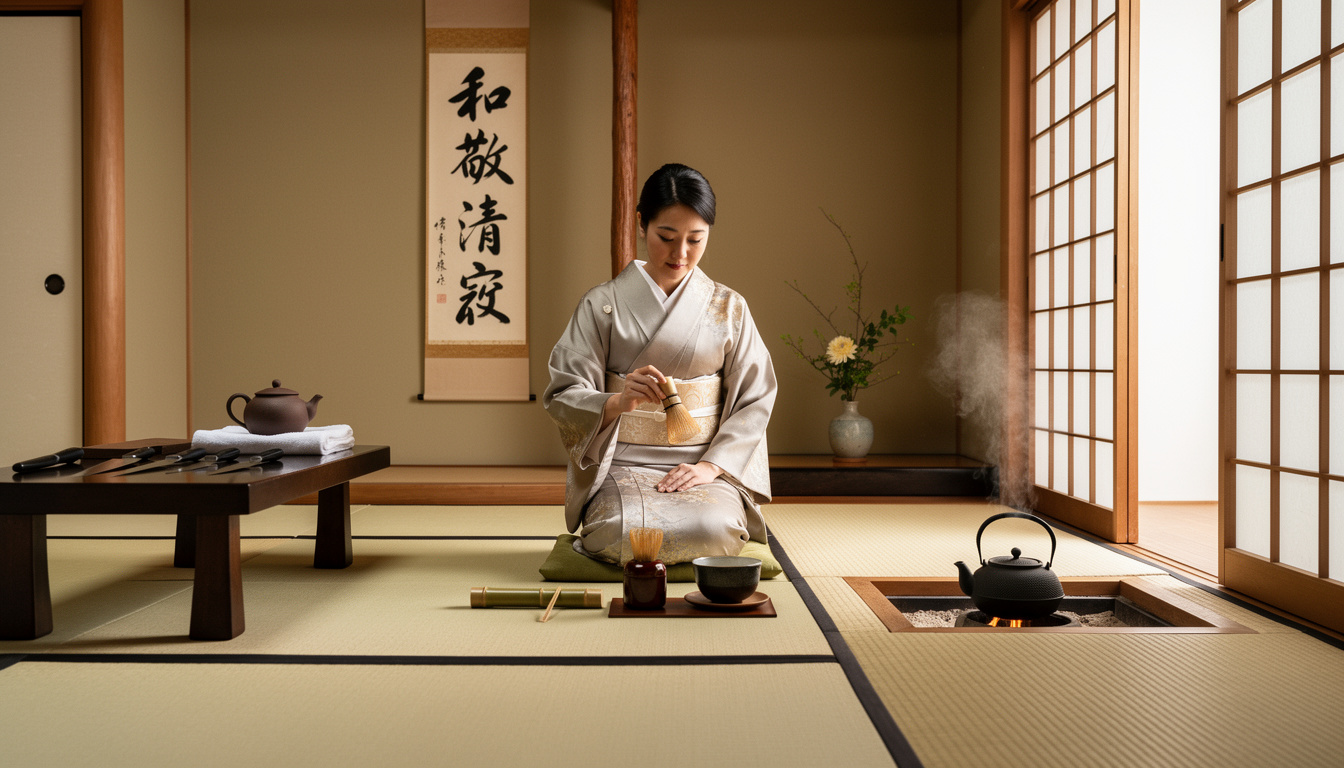
En bref — Quick brief
- 📍 Where to book: historic tea houses in Kyoto (Sannenzaka, Ninenzaka, Arashiyama) offer the most authentic experience.
- 🗓️ Booking tips: reserve ahead for peak season, but same-day reservations are often possible for small groups.
- 🍵 What to expect: demonstration by a tea master, hands-on matcha preparation, seasonal wagashi, and strict but gentle tea ceremony etiquette.
- 💳 Payment & cancellation: prepayment is common; check the booking site’s cancellation policy for last-minute changes.
- 📸 Practical: photography allowed if it doesn’t disturb others; video usually prohibited.
Japanese tea ceremony booking: how can you reserve an authentic experience?
A romantic, almost cinematic ritual waits behind the sliding doors of Kyoto’s centuries-old tea houses — a world where a single bowl of matcha connects history, horticulture and hospitality. Travelers seeking an authentic experience will find more than a tasting: the tea room, the choice of bowl, the seasonal wagashi and the slow choreography of the host form a living narration of Japanese culture that has been refined for roughly 400–500 years. Reservations for this ritual vary from intimate private sessions to shared group tea ceremony tour formats, each promising a different emotional cadence and level of immersion.
For planners and restless nomads alike, understanding how to secure the right tea house reservation — whether a historic Sannenzaka teahouse tied to Toyotomi Hideyoshi or a modern machiya near Kiyomizu — transforms a simple booking into a cultural highlight of any itinerary. This guide decodes the options, etiquette, pricing and last-minute strategies to turn a standard booking into a memory that lingers like the aftertaste of premium matcha.
How to secure a Japanese tea ceremony booking in Kyoto — practical steps for an authentic experience
Begin with a clear idea of the type of session desired: a traditional tea ceremony demonstration, a hands-on matcha preparation class, a private lesson for families, or a tea ceremony with kimono options. Availability and capacity differ by venue: some accept up to 25 people, others cap at a dozen for intimacy.
Practical reservation steps include choosing date/time, confirming language support (many tea houses provide English instruction), and prepaying when required. If planning a broader Japan trip, align the tea session with nearby sights — a tea ceremony near Kiyomizu blends beautifully into a day following a Golden Route 2026 or a tailored Japan 7-day itinerary.
Typical reservation formats and what they include
Most tea houses offer three standard formats: shared group lessons (affordable, social), private lessons (ideal for families or special occasions), and combined plans with kimono rentals or guided walks. Expect demonstrations by a seasoned tea master, a guided chance to make matcha, and seasonal sweets sourced from historic confectioners.
For example, a popular Sannenzaka teahouse emphasizes its historic ties to local feudal figures, a garden by Ogawa Jihei the 7th, and premium matcha supplied by a long-standing Kyoto tea shop — all elements that define an authentic experience.
Comparing notable tea houses and what to book — Sannenzaka vs Nagomi
Choosing between tea houses depends on atmosphere, group size, and educational content. Sannenzaka-style venues highlight deep historical links and a contemplative garden view, while Nagomi locations blend accessibility with interactive touches like selecting your Kiyomizu-yaki bowl.
| Feature 🏯 | Sannenzaka-style Tea House 🌿 | Nagomi (Ninenzaka / Arashiyama) 🏮 |
|---|---|---|
| Location / vibe 📍 | Historic Sannenzaka, garden by Ogawa Jihei the 7th 🌸 | Machiya over 100 years old, near Kiyomizu & bamboo grove 🎋 |
| Lesson format 🍵 | Group lessons (¥7,700), demonstration + hands-on; max 12 people | Shared (¥3,500) and private options; up to 25 people at Ninenzaka |
| Tea & sweets 🍡 | Premium, less-bitter matcha from a long-established Kyoto shop | Gion Tsujiri matcha, Kiyomizu Temple dry sweets and seasonal wagashi |
| Special touches ✨ | Historical anecdotes linked to Toyotomi Hideyoshi and haiku heritage | Choose your Kiyomizu-yaki bowl; water from Mount Fuji springs 💧 |
Selecting a venue with clear language support is crucial: look for staff fluent in English or a stated bilingual instructor to ensure the cultural narratives and tea ceremony etiquette are fully explained. Insight: pick a place that matches the desired pace — slow contemplation or interactive learning.
Step-by-step: making the reservation and preparing for the day
Reserve directly through the tea house booking form or via trusted tour platforms. For private groups, contact the venue early; many tea houses ask groups of 12 or more to reserve by phone or form to hold time and space. Same-day bookings are often possible but become scarce during cherry blossom and holiday seasons.
Arrival guidance: aim to reach the tea room five minutes early, wear comfortable clothing (kimono optional), and bring a printed or digital booking confirmation. If changes are needed, most venues accept modifications up until the day before; check each site’s cancellation policy for exact fees.
Essential checklist before a tea ceremony reservation
- 📝 Confirm language: ensure English instruction or request a private interpreter.
- 👨👩👧👦 Children & capacity: book private for kids under 6; group lessons usually welcome ages 7 and up.
- 💳 Payment: prepayment is common—have a credit card ready or check booking platform policies.
- 📷 Photography: permitted if unobtrusive; video is typically prohibited.
- 🎎 Kimono option: available via rental links at booking, though some venues don’t rent on-site.
Insight: syncing a tea ceremony with nearby sights yields the most rewarding day — combine morning calm in a tea room with an afternoon stroll through Kiyomizu or Arashiyama. For multi-day planning, integrate tea experiences into longer itineraries like a Japan 14-day itinerary to balance cities and cultural immersion.
Tea ceremony etiquette and what visitors should know
A core part of the traditional tea ceremony is etiquette — not as rigid rules but as gestures of respect. Guests are guided on how to receive the bowl, rotate it before sipping, and express appreciation to the host. These small rituals create shared serenity and are explained clearly during most sessions.
Practical etiquette notes: remove shoes before entering, handle the bowl with both hands, and refrain from loud conversation. For photographers: take still photos sparingly and avoid disrupting others. Final insight: embracing etiquette transforms the visit from a photo op into a moment of cultural exchange.
Reasons to choose a guided tea ceremony tour versus independent booking
- 👀 Guided context: a guide connects movements to history and philosophy, enriching the sensory experience.
- 🧭 Logistics simplified: guided tours handle tea house reservation, transport and timing.
- 🤝 Language support: guides often translate cultural nuances and correct etiquette gently.
Booking a guided tea ceremony tour is ideal for visitors short on time or eager for layered storytelling; independent reservations suit those who prefer a quieter, self-paced moment. Insight: choose based on desired depth rather than price alone.
Last-minute reservation hacks, special cases and local tips
Same-day reservations can work for single visitors or small pairs; use official booking forms or the tea house’s social pages for quick confirmation. For groups larger than posted capacities, secure an initial holding reservation for the maximum allowed and follow up with venue contact information.
Special cases — infants, language needs, or private events — often require a private plan. Many venues will accept private bookings for families with young children or visitors needing an interpreter, though availability may be limited.
| Scenario ❓ | Recommended action ✅ | Typical fee / note 💬 |
|---|---|---|
| Same-day booking 🕒 | Use online booking form or contact social page directly | Usually accepted; subject to availability 📲 |
| Private lesson for child under 6 👶 | Book private plan and inform venue in advance | Private rates apply; child often free or reduced |
| Group of 12+ people 👥 | Contact venue to hold a larger reservation | Deposit or prepayment may be required |
Final tip: pair a tea ceremony with evening exploration — Kyoto’s calm streets invite discreet discoveries, or add a cultural counterpoint like a visit to curated bars using resources such as a guide to Japanese whisky bars for a balanced day of tradition and contemporary taste.
Can visitors with no prior experience join a tea ceremony?
Yes. Most tea houses welcome beginners and provide clear, patient instruction in English. Hands-on classes guide participants through preparing matcha and observing proper tea ceremony etiquette.
How far in advance should a tea ceremony booking be made?
For peak seasons (cherry blossom or autumn foliage) book weeks in advance. For off-peak times, same-day reservations can work, but prebooking gives access to private lessons and preferred time slots.
Are children allowed to participate in the tea ceremony?
Children are welcome, but venues often ask families with infants (under 5–6 years) to choose private plans. Group lessons usually accept children aged 7 and above.
What is the cancellation and payment policy?
Many tea houses require prepayment and enforce cancellation fees for last-minute changes. Always check the specific booking platform’s policy; same-day cancellations often incur full fees.