 EN
EN


Last updated on April 2, 2025.
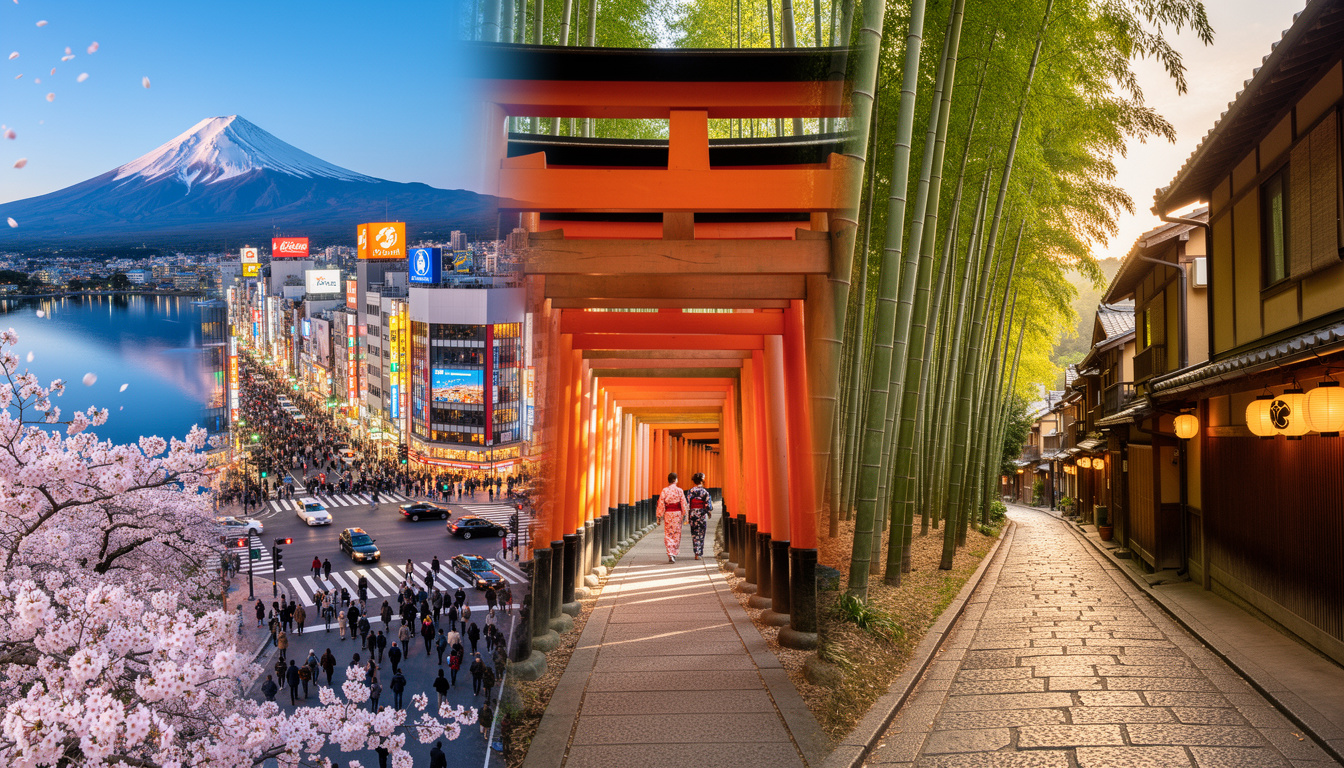
Japan itinerary 10 days: what are the must-see destinations? This travel guide distils a decade-plus of on-the-ground experience into a dynamic, emotion-driven plan built for first-timers and returners who want to feel Japan’s contrasts: neon pulse, temple calm, hot-water ritual and mountain silence. The itinerary balances urban intensity with restorative nights in ryokan and a temple stay, maximising actual sight-seeing time while keeping travel flow manageable. Practical links for transport, connectivity and accommodation are woven into the plan so bookings and last-minute changes remain simple. Expect advice on when to activate a JR Pass, where to hunt for vegetarian options, how to catch a clear view of Mount Fuji, and which side-trips (Nara, Kōya-san, Hakone) are worth an overnight detour rather than a rushed day Japan trip. Passion for the country and meticulous planning merge here to help shape an unforgettable 10-day Japan travel plan.
- 🗺️ Core route: Tokyo → Hakone → Shibu Onsen → Kyoto → Kōya‑san/Nara → Osaka
- ⏳ Pacing: Mix of 2–3 night city stays + 1-night special stays (ryokan, temple)
- 🔥 Highlights: Mount Fuji, snow monkeys, Fushimi Inari, dawn chanting at Kōya‑san
- 💳 Essentials: Decide JR Pass activation day, pick a pocket Wi‑Fi or eSIM, get a Suica/Pasmo card
- 🍱 Food: Many vegetarian options exist but plan restaurants for evenings
Japan itinerary for 10 days: an emotional yet practical travel guide
This Japan travel itinerary is crafted to showcase the country’s extremes: a skyline that hums at all hours and a countryside that unfolds in silent, snowy breaths. The route is deliberately designed to deliver the top places Japan is famous for, while still leaving room for unplanned delights — a shrine tucked down a side street, a candlelit izakaya, or an unexpected view of Mount Fuji through a break in the clouds.
Travelers will find clear, action-oriented tips on how to turn transit time into meaningful experiences, and how to choose which must-see destinations Japan deserves one night and which deserve three. The plan assumes moderate budget flexibility: save on city nights, splurge on two unforgettable stays (a ryokan and a temple lodgings) — both yield memories that outlast souvenir photos.
10-day day-by-day Japan travel itinerary (quick table)
| Day | Main base | Highlights |
|---|---|---|
| Day 1–3 | Tokyo 🏙️ | Shibuya crossing, Akihabara arcades, Meiji Shrine, nightlife 🍣 |
| Day 4 | Hakone 🌿 | Hakone Loop, Mount Fuji views, open-air sculpture park 🏔️ |
| Day 5 | Shibu Onsen 🛀 | Snow monkeys, traditional onsens, ryokan experience 🐒 |
| Day 6–7 | Kyoto 🏯 | Fushimi Inari, Kiyomizu-dera, Gion, Nishiki Market 🎎 |
| Day 8 | Kōya‑san / Nara 🌲 | Temple stay, monk chanting, Tōdai‑ji and deer park 🕯️ |
| Day 9–10 | Osaka 🍜 | Dōtonbori, food crawl, last-minute shopping 🛍️ |
Days 1–4: Tokyo — the electric launchpad for the 10-day Japan itinerary
Start with three nights in a central neighbourhood to cut travel friction and recover from jet lag. Shibuya, Shinjuku or Ginza each offer different rhythms: Shibuya for neon nightlife and easy izakaya-hopping, Ginza for design and coffee culture, Shinjuku for late-night energy. A prepaid IC like Suica or Pasmo makes subway life fluid — practical details and buying tips can be found in a focused Suica/Pasmo guide.
Plan a mix of high-energy districts (Akihabara arcades, Harajuku fashion) and quieter pockets (Meiji Shrine, small bookshop alleys in Jimbocho). Favourite food experiences include casual curry shops, tofu specialty restaurants, and a late-night izakaya plus karaoke session. For where to sleep in Tokyo, consult curated options for short stays and apartments on the Airbnb Japan selection.
Practical Tokyo tips — transport and food
Buy either single-day metro passes for intensive days. For longer journeys, keep a plan for when to activate a JR Pass so the seven-day coverage aligns with inter-city travel. A detailed JR Pass overview and cost-benefit primer is available here: JR Pass guide. Final insight: reserve one dinner at a memorable rooftop bar or a quiet cocktail den for panoramic city views — it frames the contrast with the coming rural days.
Day 4–5: Hakone — Mount Fuji and restorative onsen
Hakone offers a concentrated nature escape only a short shinkansen away. The classic Hakone Loop (boat, ropeway, cable car and local trains) can be rushed in a single day but is more satisfying over an overnight stay. For those seeking the best attractions Japan countryside has, aim for clear weather mornings to catch Mount Fuji peeking above the ridge.
Book at least one ryokan night and consider private onsen access for a quiet shared soak. For ryokan recommendations and bookings, see a curated list of the best ryokan in Japan.
Day 5–6: Shibu Onsen & the snow monkeys — an intimate nature detour
A deliberate detour to Shibu Onsen and Jigokudani Monkey Park rewards the itinerary with a striking animal encounter: wild Japanese macaques bathing in thermal pools. The setting is rugged, the walk rewarding. Stay overnight in a local ryokan to access the town’s nine public baths and feel the town’s ritual rhythm after dark.
Practical note: getting there involves several train changes from Hakone/Tokyo; plan luggage storage and transfer windows carefully. If a day Japan trip is preferred, Nagano offers tours to the snow monkeys, but an overnight in Shibu Onsen deepens the experience.
Days 6–8: Kyoto — the cultural heart and must-see destinations Japan associates with tradition
Two nights in Kyoto gives a focused hit of the city’s spiritual landmarks: Fushimi Inari with its endless torii gates, the hillside temple of Kiyomizu‑dera for sunset, and the Golden Pavilion. Stay in Higashiyama or near Gion to fall asleep to temple bells.
Kyoto’s culinary scene ranges from Michelin kaiseki to humble market snacks at Nishiki. For vegetarian travellers, research shojin-ryori options and reserve in advance to avoid disappointment. Pair a morning in Arashiyama’s bamboo with an afternoon stroll through historic lanes for a balanced day.
Kyoto logistics and side-trip thinking
Kyoto is also a hub for day trips: Nara’s giant Buddha and deer park, or a shinkansen ride west to Hiroshima and Miyajima if time allows. If the schedule feels tight, consider skipping long side trips and using saved travel time for more nights in Kyoto or Osaka. For shinkansen ticket prices and timing, check the updated resource at Shinkansen tickets and prices.
Day 8–9: Kōya‑san and Nara — temple life and ancient capital echoes
A night on Mount Kōya transforms the trip: temple lodgings (shukubō) include vegetarian monk cuisine and the chance to hear early-morning sutra chanting. The atmosphere in the cemetery paths at dusk is quietly powerful. Nara, en route or as a short stop, offers Tōdai‑ji’s Daibutsu and friendly park deer — a contrastive dose of ancient Japan sightseeing.
Plan transport carefully; the route to Kōya‑san includes a scenic funicular that feels like a rite of passage into a sacred landscape. Leave a small window to wander the lantern-lit forest at night — the memory stays.
Days 9–10: Osaka — the culinary punctuation
Finish in Osaka for two nights or for the final evening before departure. Dōtonbori is perfect for an energetic food crawl: takoyaki, okonomiyaki, and late-night snack culture. The city offers efficient airport links and last-minute shopping districts to pick up regional Kit Kat flavours or ceramics.
For accommodation types beyond ryokans and Airbnbs, consider capsule or business hotels as compact practical options; a guide to capsule hotels and business stays is available here: capsule hotels in Japan and business hotels.
Practical chapters: transport, money, connectivity — how to keep the flow
JR Pass timing: For this 10-day route a 7-day pass often pays off if activated mid-trip to cover the longer inter-city legs. A decisive JR Pass primer is here: JR Pass guide. Check routes that are excluded (private lines, some local loops) and reserve shinkansen seats when needed.
Local transport & IC cards: Use an IC card for subways and buses; it simplifies small transfers and saves time. Full practical guidance on getting around Japan is compiled at getting around Japan.
Connectivity and money
Pocket Wi‑Fi and eSIM options remove friction for maps and last-minute bookings — order ahead and pick up at the airport for instant coverage. A trusted overview of options is at pocket Wi-Fi and eSIM options. For cash access, ATMs that accept international cards are spotty; plan withdrawals at major convenience stores or follow practical ATM advice here: how to withdraw money in Japan.
Accommodation choices: where to stay in Japan for a 10-day loop
Mix stays for texture: two or three city nights in Airbnbs or business hotels, one ryokan in Hakone, one ryokan in Shibu Onsen, and a temple stay at Kōya‑san. For curated ryokan picks and booking tips, see the best ryokans list: best ryokan Japan. For flexible city apartments, check the Airbnb guide above.
For travelers who want quirky options, explore capsule hotels or even a themed love-hotel night — details and etiquette are available here: love hotels guide and the capsule hotel link above.
Top highlights list — must-see destinations Japan (compact checklist) ✅
- 🌸 Fushimi Inari Shrine — endless vermilion gates and photo moments
- 🗻 Mount Fuji seen from Hakone — sunrise or clear morning is key
- 🐒 Jigokudani snow monkeys — a rare natural spectacle
- 🛀 Ryokan onsen experience — private onsen or public bath ritual
- 🎎 Kyoto temples (Kiyomizu-dera, Kinkaku-ji) — ancient architecture and gardens
- 🍜 Osaka street food in Dotonbori — last-night culinary crescendo
- 🕯️ Kōya‑san dawn chanting — an unforgettable spiritual moment
Alternative travel modes and extras
For readers considering driving, car rental opens remote spots like Takayama or the Nakasendo trail. A practical rent-a-car guide is here: rent a car in Japan. Domestic flights can also save time for far-flung additions (Okinawa, Hokkaido); see options here: Japan domestic flights.
When short on time, prioritise one long-distance move per active JR Pass day to maximise value. If budget is tighter, stay longer in Tokyo and Kyoto and convert the mountain overnight stops into day trips — but note that Kōya‑san and Shibu Onsen lose much of their magic if rushed as mere day Japan trips.
Compact costs and budgeting for 10 days Japan
Expect a mid-range 10-day Japan travel itinerary to include accommodation, transport and food that together roughly match major Western cities. A practical budgeting rule: allocate most flexibility to two splurge nights (ryokan/temple), and economise with local lunches and a mix of hostels/Airbnbs. For money-saving tips and tools, consult the general resources at Japan Trip Calculator.
Is 10 days enough to see the must-see destinations Japan offers?
Yes — 10 days is enough for a well-balanced route covering Tokyo, Hakone (for Mount Fuji), the snow monkeys, Kyoto, Kōya‑san/Nara and Osaka. The key is to prioritise experiences and accept a few overnight moves rather than trying to fit all regions into one trip.
Should a JR Pass be purchased for a 10-day Japan travel itinerary?
A JR Pass can be cost-effective if activated to cover multiple long-distance shinkansen trips. For this 10-day route, a 7-day pass often saves money if activated when leaving Tokyo for the west/central legs. Compare specific journeys using shinkansen price resources before buying.
How to handle connectivity and mobile internet while traveling in Japan?
Order a pocket Wi‑Fi or an eSIM in advance and pick it up at arrival for instant connectivity. Many Airbnbs and hotels provide devices, but pre-arranged rental ensures uninterrupted maps and booking access. See the recommended pocket Wi‑Fi and eSIM options for details.
Are vegetarian options available during a Japan trip?
Vegetarian choices exist but require planning, especially for evening meals in smaller towns. Research shojin-ryori restaurants and inform ryokans or temples of dietary needs in advance to ensure suitable meals.