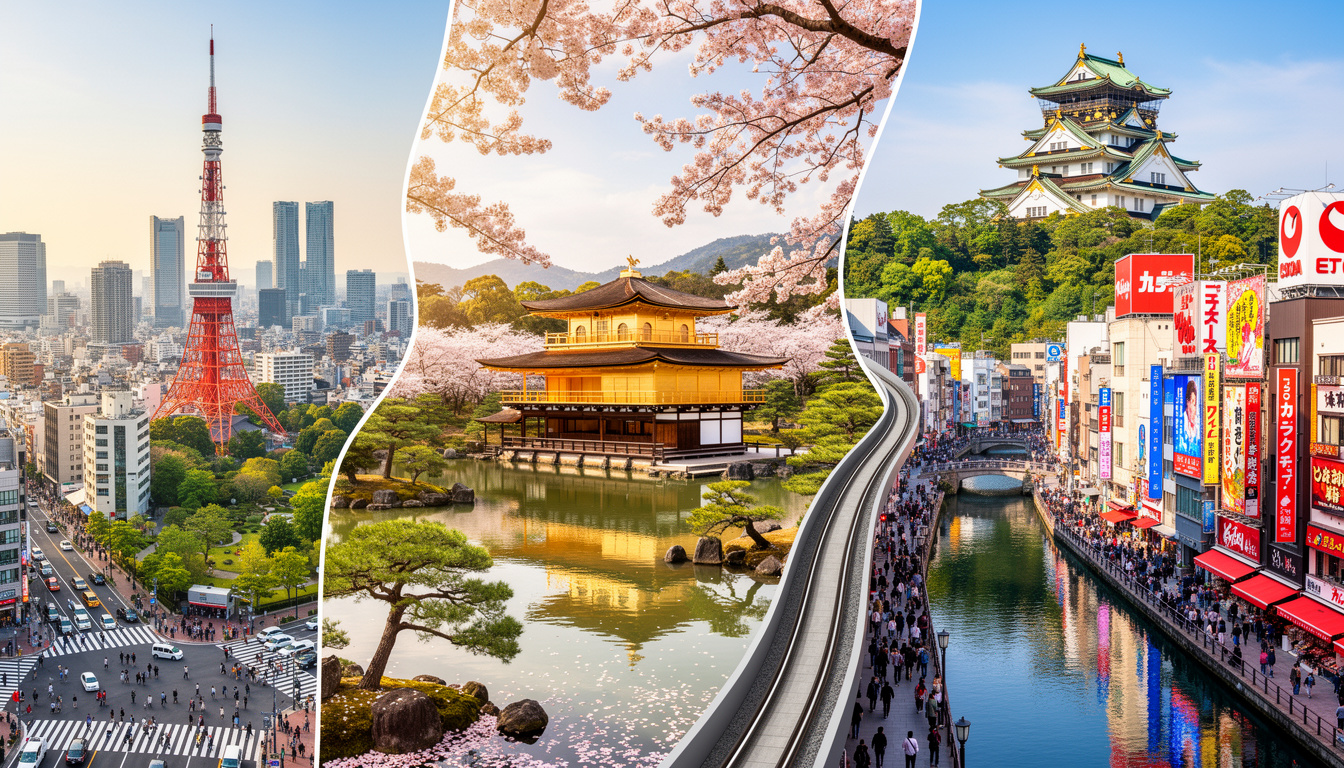
A fast, emotionally charged plan for navigating Japan’s three crown cities — Tokyo, Kyoto and Osaka — that transforms the usual checklist into a cinematic travel route. This piece distills years of on-the-ground observation into an actionable itinerary that prioritizes rhythm over rush: metropolitan sunrise in Tokyo, temple-light in Kyoto, and neon nights in Osaka. It outlines practical choices — when the Shinkansen is a time-saving necessity, when local trains reveal neighborhood secrets, and how a clever accommodation pick restores energy between sightseeing marathons. Built around a fictional digital nomad named Ren, who moves from co‑working cafes in Shibuya to ryokan tatami in Gion and finally to late-night street stalls in Dotonbori, the narrative shows how to thread efficient travel logistics with moments of discovery. Expect clear travel-plan options, money-saving tactics, and realistic day-by-day suggestions that fit both a brisk 7‑day sprint and a relaxed 10‑day immersion. Practical links to connectivity, passes and lodging choices are woven in so every reader can convert inspiration into bookings. This guide is both a map and a mood: it guides the feet and moves the heart toward the best route for a Japan trip that stays with you long after the last train leaves the platform.
- 🔑 Best route: Use Shinkansen for long hops, local trains for city exploration.
- 🕒 Time split: Typical split — Tokyo 3–4 days, Kyoto 3–4 days, Osaka 2–3 days.
- 💸 Budget: Compare a Japan Rail Pass with single tickets using a Japan Rail Pass calculator.
- 📶 Stay connected: Prebook pocket Wi‑Fi or an eSIM for seamless navigation via pocket Wi‑Fi and eSIM options.
- 🏨 Sleep smart: Mix central business hotels, a ryokan night and an Airbnb for balance — see Airbnb options.
Best route for Tokyo Kyoto Osaka itinerary: fastest vs most immersive travel route
Choosing the best route hinges on priorities: speed, cost, or cultural depth. For many, the classic line — Tokyo → Kyoto → Osaka — is the most efficient travel route because the Shinkansen reduces cross-country travel to under three hours between Tokyo and Kyoto, leaving afternoons free for sightseeing.
For a more immersive Japan trip, reverse the loop (Osaka → Kyoto → Tokyo) to arrive via Kansai International and build momentum into Tokyo’s sprawling districts. Use local trains to explore neighborhoods, and keep the Shinkansen for the long legs. This balance conserves energy for peak afternoons and late evenings when each city reveals its best self.
Key insight: choose the route that matches the pace wanted — Shinkansen for efficiency, local lines for deep city exploration.
Planning your Tokyo Kyoto Osaka travel route: priorities, passes and timing
Start by listing priorities: temples, food, shopping, or nature. A focused travel plan reduces wasted transit time and brings richer encounters. For example, a history lover will allocate extra Kyoto days for temples and off‑beat subtemples; a foodie will swap a morning temple visit for a night in Dotonbori.
Practical tools: use a realistic travel budget guide to set expectations and check the recommended budget estimates. Find the cheapest time to fly with seasonal insights at cheapest time to fly to Japan. These choices shape whether the Japan Rail Pass is cost-effective or if regional tickets make more sense.
Key insight: plan around what energizes the traveler — that becomes the spine of the entire itinerary.
Sample 10-day Tokyo Kyoto Osaka itinerary: a day-by-day travel plan
This 10‑day route blends iconic sightseeing with hidden gems — perfect for first-timers and return visitors seeking a balanced Japan trip. It assumes arrival in Tokyo and return from Tokyo, with a smooth Shinkansen leg between cities.
| Day | Base city | Highlights | Transport tip |
|---|---|---|---|
| 1 | Tokyo | Shibuya crossing, Meiji-jingu 🌸 | Arrive NRT/HND — use airport train 🚆 |
| 2 | Tokyo | Asakusa Senso‑ji, Ueno museum 🖼️ | Buy day subway pass or use Suica/PASMO card guide 🚉 |
| 3 | Travel to Osaka | Shinkansen to Osaka — afternoon Namba stroll 🍜 | Activate JR Pass if used 🔖 |
| 4 | Osaka | Aquarium, Osaka Castle, Kita district 🏯 | Buy 1‑day Osaka pass for attractions 🗺️ |
| 5 | Osaka | Minami food crawl, Dotonbori neon 🌃 | Explore on foot for best street food finds 🍢 |
| 6 | Kyoto | Kiyomizu‑dera, Gion, Nishiki Market 🍵 | Train from Osaka to Kyoto — drop luggage at station 🧳 |
| 7 | Kyoto | Arashiyama bamboo, Kinkaku‑ji 🌿 | Start early to avoid crowds at temples ⛩️ |
| 8 | Kyoto | Kurama/Kibune hike, Philosopher’s Path 🚶 | Consider local buses and a taxi for remote spots 🚕 |
| 9 | Travel to Tokyo | Return by Shinkansen — last-minute shopping 🛍️ | Reserve seat for evening Shinkansen if peak season 🎫 |
| 10 | Tokyo | Final sightseeing, airport transfer ✈️ | Allow buffer time for airport security ⏳ |
Key insight: a 10‑day plan uses travel days strategically — mornings for transport, afternoons for discovery — producing a relaxed yet full Japan trip.
Trip Tokyo Kyoto Osaka: budget tips and smart money choices
Budgeting transforms possibilities into reality. A 10‑day trip can range from modest to luxurious depending on lodging and dining choices. Use the comprehensive cost guide at Japan trip cost as a starting point.
Top money-saving tactics include comparing the Japan Rail Pass calculator against point-to-point Shinkansen tickets, grabbing lunch specials (teishoku) for cheap quality meals, and booking flights during the cheapest seasons. Connectivity hacks like pre-booking pocket Wi‑Fi via the pocket Wi‑Fi and eSIM page avoid costly airport counters.
- 💳 Buy a Suica/PASMO card for seamless city travel and tiny transaction speed — see guide here.
- 🍱 Favor lunch sets and markets for authentic, affordable meals.
- 🧳 Use luggage forwarding between cities to travel light and move faster.
- 🧾 Consider a 1‑week JR Pass only if Shinkansen rides match the pass value.
Key insight: small daily choices compound — transport cards, lunch specials and smart passes cut costs while preserving experience.
Trip Tokyo Kyoto Osaka: accommodation choices that save time and heighten experience
Accommodation shapes the mood of each city stay. In Tokyo, favor locations near Shinjuku or Shibuya to minimize transit time and maximize evening energy. Kyoto rewards at least one night in a ryokan for cultural immersion; book early for peak seasons. Osaka’s Namba and Umeda neighborhoods place travelers in the heart of food and nightlife.
Mixing lodging types optimizes budget and experience: a few nights in comfortable business hotels, a ryokan night in Kyoto, and a budget capsule or Airbnb for shorter stays is an effective combo. Explore options via guides on business hotels, capsule hotels, and the curated list of the best ryokan in Japan.
Key insight: choose one memorable stay (ryokan) and a practical home base in each city to maximize restful sightseeing time.
Practical hacks for city exploration and sightseeing in Tokyo, Kyoto and Osaka
City exploration becomes effortless with a few reliable hacks. Start days early at popular temples to avoid crowds. Reserve Shinkansen seats for peak travel days. Use station lockers or hotel luggage storage to make travel days sightseeing-friendly. For day trips into rural areas, consult the rent-a-car guide for flexibility beyond trains: car rental options.
Ren, the digital nomad guiding this route, prefers to plan one major activity per day and leave afternoons open for spontaneous alleyway discoveries. That method keeps the travel plan human and permits unplanned cultural moments that become the most vivid memories.
- 🕰️ Start early at temples — mornings are quieter and softer for photos.
- 🎫 Reserve Shinkansen seats for peace of mind on busy days.
- 🧭 Use a Suica/PASMO for fast transfers and to avoid ticket lines.
- 🚪 Drop luggage at stations — this buys a whole day of exploration.
Key insight: small logistical moves — lockers, passes, seat reservations — free the schedule for meaningful sightseeing.
How many days are ideal for a Tokyo Kyoto Osaka itinerary?
A flexible answer: 8–10 days gives a balanced experience — typically 3–4 days in Tokyo, 3–4 in Kyoto, and 2–3 in Osaka. Adjust according to interests: extend Kyoto for culture or Osaka for food-focused trips.
Is the Japan Rail Pass worth it for this route?
It depends on the number of long-distance trips. Use the Japan Rail Pass calculator to compare the cost of individual Shinkansen tickets against a pass. For multiple long legs, it often pays off.
What’s the best way to save on accommodation?
Mix mid-range business hotels with one ryokan night and occasional capsule or guesthouse stays. Booking in advance and checking guides like the Airbnb options helps secure deals.
How to stay connected and navigate easily?
Prebook pocket Wi‑Fi or an eSIM via the pocket Wi‑Fi and eSIM page and download offline maps. A Suica/PASMO card simplifies ticketing for subways and buses.